
Legal Documents for Selling Land in West Virginia | Sell West Virginia Land

Legal Documents for Selling Land in West Virginia
The legal documents for selling land depend on ownership, title history, tax status, buyer terms, and whether the property is vacant land, inherited land, trust property, company-owned land, or a simple individual sale. Most transactions need a written purchase agreement, deed preparation, title review, tax payoff information, closing instructions, and a settlement statement.
This guide is general information, not legal advice. A real estate attorney, title company, or closing professional can explain which documents are needed to sell your specific parcel. The key is to use written documents instead of handshake terms, especially when the land has multiple owners, back taxes, boundary questions, or an out-of-state seller.
Purchase Agreement and Sale Contract
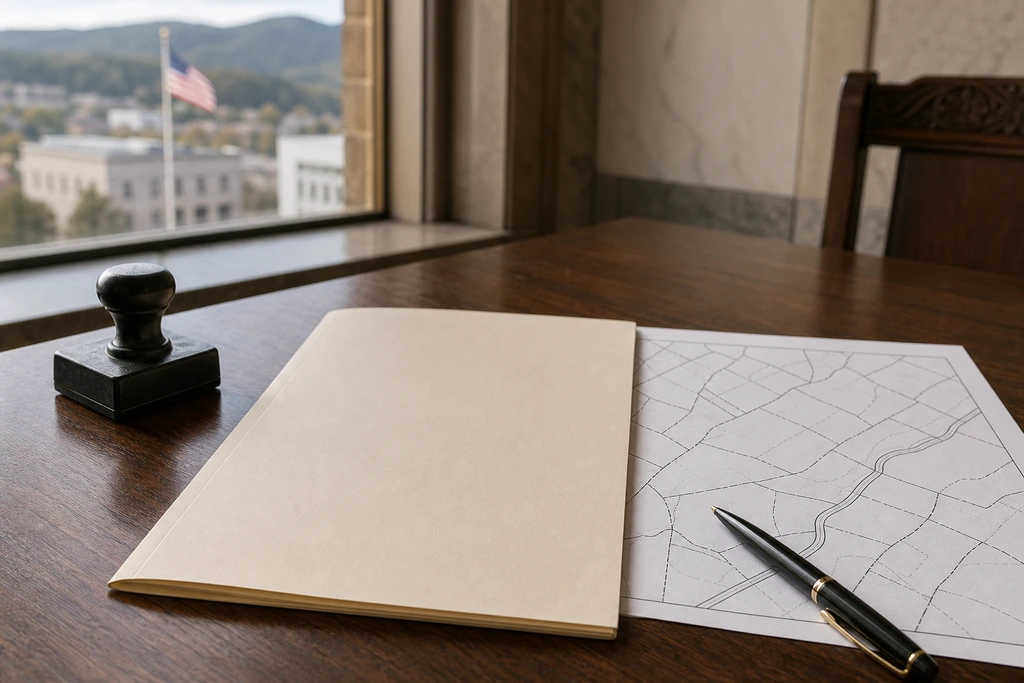
The purchase agreement is the main agreement between buyer and seller. It should identify the parties, parcel, legal description or parcel number, purchase price, earnest money if any, closing date, closing cost responsibility, title review period, contingencies, and what happens if a title issue appears. A clear sale contract keeps the transaction from depending on memory or text messages.
A land purchase agreement can be simpler than a house contract, but it should still address land-specific issues. Access, mineral reservations, timber, surveys, zoning, septic questions, and whether improvements are included can matter. If you sell land by owner, do not skip this document just because the buyer seems friendly.
Deed, Warranty Deed, and Legal Description

The deed transfers ownership at closing. In West Virginia, the deed must use the correct seller names, buyer names, vesting, notary language, and legal description. Some sales use a warranty deed, while other situations may use a different deed form depending on title and agreement terms. The deed should be prepared or reviewed by the closing professional handling the transaction.
The legal description is more important than the street address. Vacant land may not have a reliable mailing address, and county tax maps are not always a substitute for the deed description. If the deed description is old, unclear, or tied to a prior survey, the title company may need extra time to confirm what is being transferred.
Documents Needed to Sell Inherited or Company-Owned Land

Inherited land can require probate documents, death certificates, heir information, estate representative authority, affidavits, or signatures from several family members. Trust-owned land may require trust certificates or trustee authority. LLC or company-owned land may require proof that the signer has authority to sell the property.
These essential documents do not always have to be ready before you request an offer, but they will matter before closing. If a buyer says they can close without checking ownership, be careful. A clean land sale should confirm that the seller has authority and that the buyer will receive a deed that can be recorded.
Title Review, Taxes, and Closing Statements
The title review checks ownership, liens, judgments, back taxes, unpaid mortgages, tax sale records, easements, and other recorded items. The title company or real estate attorney may ask for payoff information or additional documents if something appears in the records. This is normal, especially with older West Virginia parcels and inherited property.
At closing, the settlement statement shows the purchase price, tax prorations, recording fees, title fees, payoffs, and net proceeds to the seller. Review it before signing. If the buyer offered to cover normal closing costs, make sure the document reflects that agreement.
Real Estate Agent, Attorney, or Direct Buyer
A real estate agent can help market land, but the agent is not a substitute for the legal documents required to close. A real estate attorney can provide legal advice and document review. A direct buyer can present a cash offer and coordinate with title, but should still use proper paperwork for the land transaction.
When selling vacant land, ask each party what they handle and what you are expected to do. Who drafts the agreement? Who opens title? Who prepares the deed? Who pays closing costs? Who records the deed? Clear answers help property owners avoid delays and misunderstandings.
A Simple Document Checklist Before You Sell
Before you sell your land, gather the deed, tax ticket, parcel number, owner names, mailing address, any surveys, probate documents, trust documents, company authority records, tax notices, lien releases, and prior sale paperwork. If you have a land contract, old mortgage, or unrecorded agreement, mention it early.
The process of selling land is easier when the important document questions are answered before closing week. Whether you buy or sell through an agent, attorney, or cash land buyer, insist on written terms and a closing process that protects both sides.
What the Seller Should Review Before Signing
Before signing a purchase agreement, confirm that the seller names match the ownership records as closely as possible, the parcel is identified clearly, and the legal description or parcel number is not confused with a neighboring tract. If the property has several tax parcels, make sure the agreement says whether all of them are included.
Review closing cost language carefully. Some agreements say the buyer pays standard closing costs, while others shift title fees, recording fees, transfer taxes, survey costs, or attorney fees to the seller. The seller should understand those terms before comparing the offer with another buyer.
Look for inspection, feasibility, assignment, and cancellation clauses. A buyer may need a reasonable title review period, but a broad cancellation right can leave the seller tied up without certainty. If the language is unclear, ask a real estate attorney for legal advice before signing.
If the land has tenants, hunting permission, timber agreements, mineral leases, road agreements, or informal neighbor access, mention those facts early. They may not stop the sale, but they can affect what documents are needed and what the buyer expects after closing.
Closing Documents After the Agreement
After the agreement is signed, the closing professional may prepare affidavits, tax forms, payoff requests, deed drafts, title commitments, settlement statements, and recording instructions. Remote sellers may need mobile notary appointments or overnight documents. Build that time into the closing schedule so the transaction does not fail because a signature was rushed.
The final package should make the transfer clear: who sold, who bought, what land transferred, what money was paid, what taxes or liens were handled, and where the deed was recorded. That documentation protects the seller long after the land sale is complete.
If the title company asks for an affidavit, read it carefully. Affidavits may confirm marital status, heirship facts, identity details, non-foreign seller status, or the absence of unrecorded leases and liens. The seller should answer truthfully and ask questions if a statement does not match the property history.
Remote closings are common, but they still require careful execution. The notary must witness signatures correctly, the deed must be returned on time, and wiring or check instructions should come from the closing company through a verified channel. Do not rely on forwarded instructions from an unknown buyer email.
After closing, keep copies of the recorded deed, settlement statement, purchase agreement, and any tax forms. Those documents may be needed for tax preparation, estate accounting, or proof that you no longer own the parcel if future county tax mail is slow to update.
If a buyer offers to handle everything, still ask which documents you will see before signing. A simple direct sale can reduce seller workload, but the owner should know the purchase agreement terms, deed type, tax payoff treatment, and settlement numbers before the closing package is complete.
For inherited or jointly owned land, confirm every required signer is available before setting the closing date. Missing one signature can delay recording even when price, title, and buyer funds are otherwise ready.
Frequently Asked Questions
Can I request an offer after reading about legal documents for selling land in west virginia?
Yes. Send the parcel details through the form and we will review the land for a no-obligation cash offer.
Do I need every document before asking for an offer?
No. Start with the parcel location, owner name, and anything you know. More documents can be gathered during title review.
Legal Documents For Selling Land Checklist for West Virginia Landowners
This support note keeps the guide specific to West Virginia landowners while reinforcing practical owner guidance for legal documents for selling land. It is not legal, tax, or broker advice.
Detailed land-offer review factors used for this page
Cash Offer, Title, and Closing Review
West Virginia Land Sale Documents and Local Factors
West Virginia owners considering sale by owner should weigh speed, certainty, and as-is convenience against waiting for a retail buyer with financing contingencies. A seller asking about land survey should receive a clear explanation of the offer, the closing process, and any records the title company needs. For purchase and sale agreement, West Virginia sellers should ask how access, zoning, taxes, and resale demand affect a cash offer before choosing a buyer. With title to the property, our review looks at road frontage, wetlands, zoning, tax card notes, timber or field value, and recent comparable land sales.
West Virginia owners considering documents needed to sell land should weigh speed, certainty, and as-is convenience against waiting for a retail buyer with financing contingencies. A seller asking about updated land survey should receive a clear explanation of the offer, the closing process, and any records the title company needs. The agreement template details should be checked before a West Virginia landowner accepts a direct offer or signs a purchase agreement. property deed can require extra attention to access, deed restrictions, seasonal roads, utility distance, boundary questions, and municipal records.
Before accepting sale price, check whether the offer accounts for road frontage, wetlands, utilities, back taxes, heir signatures, and closing costs. The piece of land details should be checked before a West Virginia landowner accepts a direct offer or signs a purchase agreement. The necessary documents details should be checked before a West Virginia landowner accepts a direct offer or signs a purchase agreement. With possession of the property, our review looks at road frontage, wetlands, zoning, tax card notes, timber or field value, and recent comparable land sales.
For selling process, the useful comparison is the net amount after taxes, title fees, recording costs, cleanup, and the time saved by avoiding a long retail listing. West Virginia owners considering sell a house should weigh speed, certainty, and as-is convenience against waiting for a retail buyer with financing contingencies. For purchase and sale, West Virginia sellers should ask how access, zoning, taxes, and resale demand affect a cash offer before choosing a buyer. For essential documents needed, a careful review helps the seller understand title status, parcel limitations, buyer timeline, and net closing proceeds.
The value of residential property often depends on buyer use, buildability, survey confidence, carrying costs, and how similar parcels have sold nearby. Before accepting land sale contract, check whether the offer accounts for road frontage, wetlands, utilities, back taxes, heir signatures, and closing costs. For legal issues, a careful review helps the seller understand title status, parcel limitations, buyer timeline, and net closing proceeds. A clear sale agreement plan should explain when the title company opens escrow, which documents are needed, and how quickly the seller can approve terms.
West Virginia owners considering requirements for selling should weigh speed, certainty, and as-is convenience against waiting for a retail buyer with financing contingencies. For West Virginia sellers, list your property should be reviewed as land first, not priced like a finished house with easy mortgage financing. For selling a property, the useful comparison is the net amount after taxes, title fees, recording costs, cleanup, and the time saved by avoiding a long retail listing. A clear sell your house plan should explain when the title company opens escrow, which documents are needed, and how quickly the seller can approve terms.
documents you need is one of the signals we use to explain the sale path in plain language before an owner decides what to do next. For required documents, a careful review helps the seller understand title status, parcel limitations, buyer timeline, and net closing proceeds. West Virginia landowners searching around real estate lawyer usually need practical answers about documents, closing dates, tax items, and whether the parcel can sell as-is. The key documents details should be checked before a West Virginia landowner accepts a direct offer or signs a purchase agreement.
The documents involved details should be checked before a West Virginia landowner accepts a direct offer or signs a purchase agreement. With value of your property, our review looks at road frontage, wetlands, zoning, tax card notes, timber or field value, and recent comparable land sales. West Virginia owners considering sell real estate should weigh speed, certainty, and as-is convenience against waiting for a retail buyer with financing contingencies. The value of real property often depends on buyer use, buildability, survey confidence, carrying costs, and how similar parcels have sold nearby.
West Virginia owners considering terms of the sale should weigh speed, certainty, and as-is convenience against waiting for a retail buyer with financing contingencies. When owners compare real estate purchase agreement, the practical question is who explains due diligence, closing costs, deed transfer steps, and possible title issues in writing. West Virginia owners considering selling property should weigh speed, certainty, and as-is convenience against waiting for a retail buyer with financing contingencies. For West Virginia sellers, property rights should be reviewed as land first, not priced like a finished house with easy mortgage financing.
When owners compare purchase the property, the practical question is who explains due diligence, closing costs, deed transfer steps, and possible title issues in writing. documents do i need is one of the signals we use to explain the sale path in plain language before an owner decides what to do next. Before accepting land for cash, check whether the offer accounts for road frontage, wetlands, utilities, back taxes, heir signatures, and closing costs. For West Virginia sellers, ownership of the property should be reviewed as land first, not priced like a finished house with easy mortgage financing.
Before accepting selling your property, check whether the offer accounts for road frontage, wetlands, utilities, back taxes, heir signatures, and closing costs. With legal description of the property, our review looks at road frontage, wetlands, zoning, tax card notes, timber or field value, and recent comparable land sales. documents related is one of the signals we use to explain the sale path in plain language before an owner decides what to do next. For list of documents, a careful review helps the seller understand title status, parcel limitations, buyer timeline, and net closing proceeds.
The general legal information details should be checked before a West Virginia landowner accepts a direct offer or signs a purchase agreement. A clear selling a home plan should explain when the title company opens escrow, which documents are needed, and how quickly the seller can approve terms. new owner is one of the signals we use to explain the sale path in plain language before an owner decides what to do next. For title deed, a careful review helps the seller understand title status, parcel limitations, buyer timeline, and net closing proceeds.
West Virginia owners considering sale process should weigh speed, certainty, and as-is convenience against waiting for a retail buyer with financing contingencies. West Virginia owners considering sell your home should weigh speed, certainty, and as-is convenience against waiting for a retail buyer with financing contingencies.
Need to sell your West Virginia land? We buy land directly from owners for cash, with no fees, no commissions, and we close in as little as 2 weeks.